
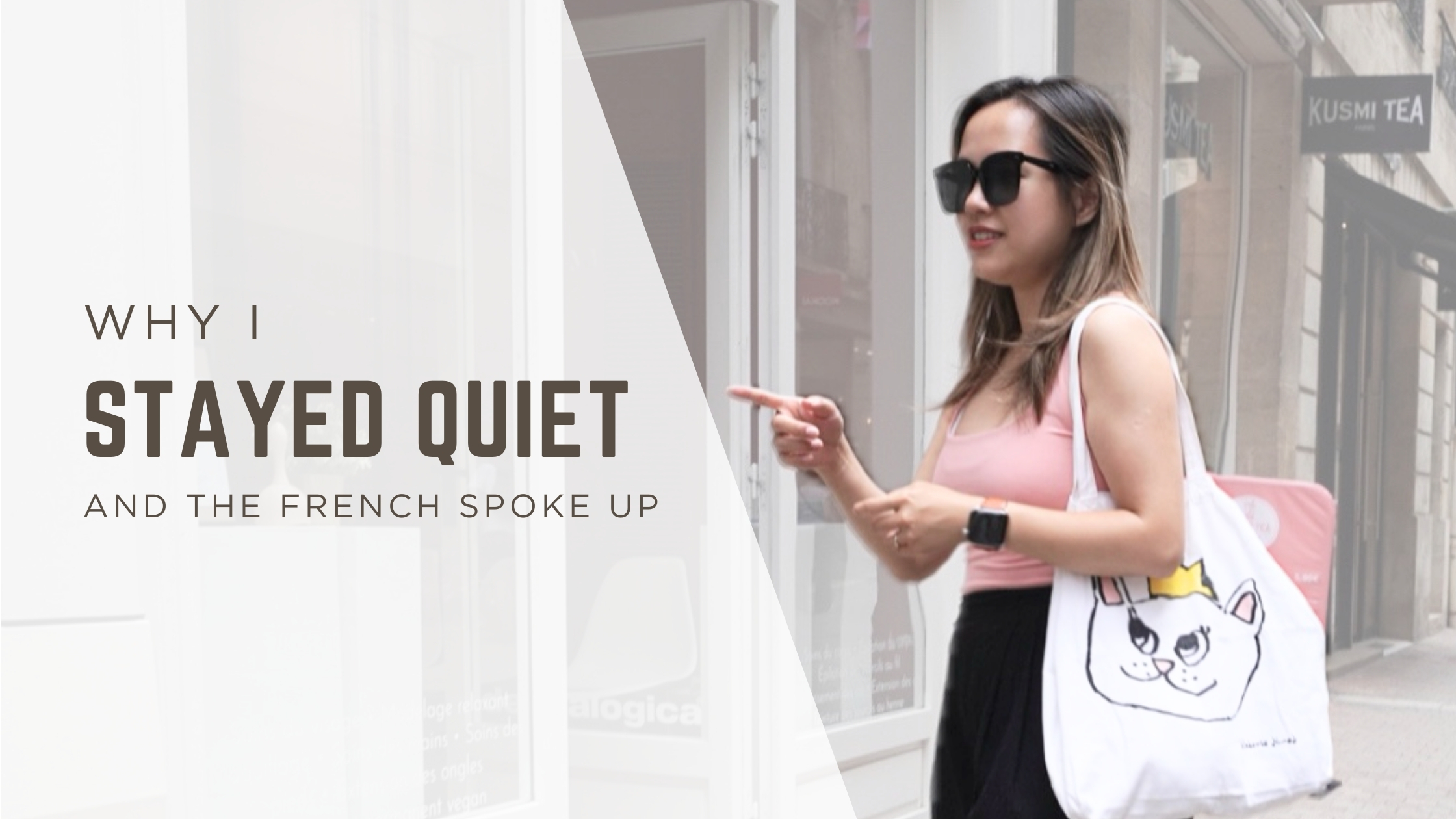
When I started learning French, I thought I was simply learning a language.
I didn’t expect it to make me reflect so deeply on how I speak, how I stay silent, and how culture quietly shapes what we think is “safe” to say. But over time, French culture did exactly that.
It didn’t just change how I hear conversations in cafés or classrooms.
It changed how I understand my own voice.
A classroom moment that never left me
Long before I moved to the UK, and long before I started learning French seriously, I had an experience that stayed with me for years.
I was at university in Hong Kong, sitting in the first lesson of a class called Film 101. There were eight students in total: seven from Hong Kong and Mainland China, and one exchange student from France.
We watched a short film. Then the professor asked a very ordinary question: “So, what do you think?”
What followed was complete silence.
Everyone suddenly became very interested in their notes. People avoided eye contact. No one volunteered an opinion. A full minute passed.
Eventually, the French exchange student spoke up. Calmly. Naturally. He shared his thoughts on the film, then turned to the rest of us and asked: “And you? What do you think?”
Again — silence.
At the time, it felt awkward and uncomfortable. But the truth is, we weren’t quiet because we had nothing to say. We were quiet because many of us had grown up believing that saying the wrong thing publicly could be embarrassing.
That moment stayed with me. And years later, French culture helped me understand why.
A culture built on speaking up
France has a long tradition of valuing ideas — not just privately, but out loud.
We often talk about French philosophers like Descartes, Rousseau, and Voltaire. But there’s one sentence that captures the French mindset particularly well:
Je pense, donc je suis.
I think, therefore I am.
This line reflects more than philosophy. It reflects a cultural belief that your thoughts matter, and that expressing them is part of who you are.
For centuries, cafés in Paris weren’t just places to drink coffee. They were places where people discussed politics, morality, society, and existence. Thinking out loud wasn’t something special, but was something normal.
This is why debate in France isn’t automatically seen as rude or confrontational. It’s participation. It’s engagement.
When I thought back to that French exchange student in my Film 101 class, I finally understood him better. He wasn’t trying to be confident or impressive. He was simply doing what felt natural in his cultural world: sharing his ideas.
Education as training, not personality
One of the most eye-opening things for me was realising that this comfort with debate doesn’t come from personality alone. It’s taught.
French students learn a very famous essay structure early on:
thèse, antithèse, synthèse.
At first, it sounds academic. But when you break it down, it teaches something very practical:
- present an idea
- seriously consider the opposite
- then bring both together and think again
Students aren’t rewarded for having fast opinions or strong certainty. They’re rewarded for thinking and for slowing down, analysing, and tolerating complexity.
When you grow up practising this, debating later in life doesn’t feel threatening. It feels familiar.
It’s not arrogance.
It’s not showing off.
It’s training. It’s habit. It’s culture.
Like learning to ride a bike when you’re young, eventually, you stop thinking about balance. Your body just knows.
French students grow up balancing ideas in the same way.
Why this felt unfamiliar to me
Coming from my own background, this way of communication felt emotionally unfamiliar.
Growing up in Hong Kong, speaking up often felt risky. Getting an answer wrong could feel embarrassing. Silence felt safer.
So when I first encountered French-style discussion, I didn’t see it as confidence. I saw it as something I hadn’t been taught.
Once I understood that difference, I stopped comparing personalities. I started comparing systems in education, cultural expectations, and values.
That shift completely changed how I relate to French culture.
Debate as connection, not conflict
Another thing I noticed, especially while spending time in France and during my exchange experience in Toulouse, was how disagreement didn’t automatically damage relationships.
People could debate passionately, interrupt each other, challenge ideas — and then simply move on. No lingering tension. No emotional fallout.
Disagreement wasn’t seen as rejection. It was engagement.
Understanding this made French conversations feel far less intimidating. It helped me see debate not as conflict, but as another way of connecting.
Why this matters now
This reflection feels especially relevant today.
We live in a world of fast opinions, instant reactions, and endless content. AI generates answers immediately. Social media rewards outrage. Nuance often feels inconvenient.
In that environment, being trained to pause, reflect, and examine multiple sides of an idea is becoming rare.
The French habit of slowing down, exploring opposing views, and synthesising instead of polarising feels important — not because it’s French, but because it helps people live with complexity.
Being able to say:
- “I’m not sure yet.”
- “Let me think.”
- “Let me hear the other side.”
That isn’t weakness. It’s maturity.
Learning to build your own voice
Learning French culture didn’t make me want to replace my own background.
Chinese culture taught me the value of harmony.
French culture taught me the value of expression.
Living in the UK taught me the value of diplomacy.
I don’t believe we need to choose one over the others. We can learn from all of them — and build a way of communicating that feels honest, thoughtful, and human.
A quiet invitation
If reflections like this resonate with you (for example, if you’re learning French, exploring culture, or simply thinking about how language shapes who we are), I share more of these thoughts in my e-newsletter.
It’s where I write more personally, more slowly, and more honestly about language, culture, and identity, which are beyond algorithms and fast content.
You’re very welcome to join me.